



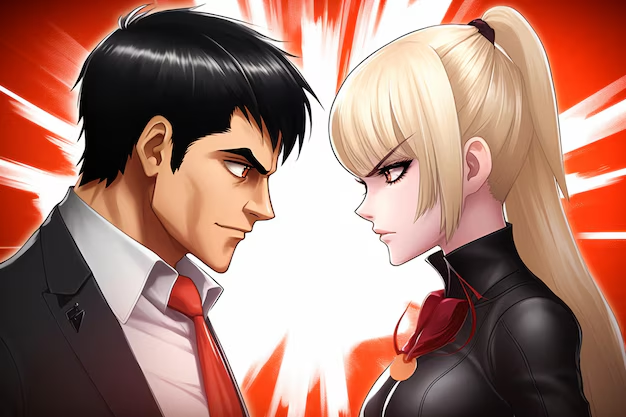
Animation has undergone a massive transformation over the last few decades, shifting from niche, regional entertainment into a dominant global force. At the center of this cultural shift is anime art. Characterized by vibrant colors, dynamic action sequences, and highly expressive characters, anime has reshaped how creators approach visual storytelling.
You can see the aesthetic everywhere. It appears in blockbuster video games, heavily influences Western animation, and drives massive engagement across digital platforms. Content creators, illustrators, and major studios are all adopting elements of this distinctive style to capture audience attention.
This article explores the journey of anime art. We will examine its defining features, trace its historical roots, and understand why it resonates with millions of people globally. By looking at its impact on games and movies, we can also anticipate where digital illustration is heading next.
What is Anime Art?
Anime art refers to the distinct visual style originating from Japanese animation and comics (manga). While the term “anime” simply means “animation” in Japan, the rest of the world uses it to describe this specific aesthetic.
This style is not limited to a single genre. It spans everything from high-fantasy adventures and science fiction to slice-of-life romantic comedies. At its core, anime art focuses on emotional expression and visual impact. Artists use specific design choices to convey complex feelings and dramatic tension without relying strictly on photorealism.
In digital media, anime art has become a foundational language. Digital artists use software like Clip Studio Paint and Procreate to replicate traditional ink and screen-tone techniques, blending classic drawing methods with modern rendering capabilities.
History of Anime
The roots of anime art stretch back to the early 20th century, heavily influenced by traditional Japanese woodblock prints and early Western animation. However, the style we recognize today began to take shape after World War II.
Osamu Tezuka, often called the “God of Manga,” played a crucial role in defining the aesthetic. He introduced the signature large eyes and expressive faces, drawing inspiration from Disney characters and classic theater. His work on Astro Boy in the 1960s set the standard for televised animation in Japan, utilizing limited animation techniques to keep production costs low while maintaining high emotional stakes.
As technology advanced in the 1980s and 1990s, the medium experienced a golden age. Studios began producing highly detailed, fluid animations for both television and film. The transition to digital ink and paint in the late 1990s and early 2000s marked another massive shift. It allowed for cleaner lines, more complex color gradients, and the integration of 3D computer-generated imagery (CGI) with traditional 2D art.
Key Features of Anime Style
What makes a piece of art instantly recognizable as anime? Several core visual elements define the aesthetic across different genres and decades.
Exaggerated Facial Features
The most prominent characteristic is the treatment of the face. Characters typically feature large, detailed eyes that convey deep emotion. Noses and mouths are often simplified, sometimes reduced to a single line or dot, shifting the viewer’s focus directly to the character’s gaze.
Vibrant and Unique Hair Design
Hair in anime is rarely bound by real-world physics or genetics. Characters frequently sport gravity-defying hairstyles in vibrant colors—blue, pink, green, and silver. These choices are rarely random; they often visually communicate a character’s personality, magical abilities, or role within the story.
Dynamic Proportions and Posing
Anime art thrives on action and movement. Artists frequently use exaggerated perspective and dynamic foreshortening to make action scenes feel powerful. Even in static illustrations, characters are often drawn in energetic poses that suggest continuous motion.
Highly Detailed Backgrounds
A fascinating contrast exists within many anime productions. While the characters may be stylized and simplified, the backgrounds are often incredibly detailed and realistic. This grounds the stylized characters in a believable world, adding depth and atmosphere to the narrative.
Why Anime is Popular Worldwide
The global explosion of anime art is driven by several intersecting factors. The primary driver is the sheer variety of stories available. Unlike many Western animated markets that historically targeted children, Japanese animation has always produced content for all age groups and demographics.
The internet accelerated this global reach. Before streaming platforms existed, dedicated fan communities translated and shared episodes online. Today, platforms like Crunchyroll, Netflix, and Hulu offer massive libraries of localized content, making the art style highly accessible.
Furthermore, the emotional depth of the narratives resonates strongly with international audiences. Anime often tackles complex themes like existentialism, societal pressure, and moral ambiguity. The stylized art helps soften the delivery of heavy topics, allowing viewers to project their own emotions onto the expressive characters.
Influence on Games & Movies
The ripple effect of anime art has permanently altered the landscape of global entertainment. The video game industry, in particular, owes much of its visual evolution to Japanese art styles.
Video Games
Iconic franchises like Final Fantasy, Persona, and Genshin Impact utilize anime aesthetics to build massive global player bases. The development of cel-shading technology allows 3D game models to look exactly like 2D anime drawings. This technique bridges the gap between interactive gameplay and cinematic animation, offering players the experience of controlling a playable cartoon.
Western Animation and Movies
Western studios frequently incorporate anime elements into their own projects. Shows like Avatar: The Last Airbender and Castlevania blend Western storytelling sensibilities with Japanese action choreography and character design. Even Hollywood has taken notice, with films like The Matrix drawing direct inspiration from classic cyberpunk anime, and franchise reboots utilizing anime studios for anthology projects.
Future of Anime Art
Digital media continues to evolve, and anime art is adapting right alongside it. The integration of 2D and 3D animation is becoming increasingly seamless. Studios are developing new software techniques to make 3D models replicate the charming imperfections of hand-drawn frames perfectly.
Virtual reality (VR) and augmented reality (AR) offer new frontiers for the art style. Virtual YouTubers (VTubers)—creators who use animated, anime-style avatars to stream and interact with fans—have become a massive industry. This technology allows anyone to adopt the anime aesthetic in real-time digital spaces.
Additionally, global collaboration is at an all-time high. Japanese studios are regularly partnering with international creators, leading to a hybridization of styles that pushes the boundaries of traditional character design.
Embracing the Future of Digital Art
Anime art is no longer just a regional export; it is a universal visual language. Its focus on bold expression, dynamic movement, and thematic diversity has cemented its place in digital media.
For aspiring artists and content creators, studying this style offers invaluable lessons in visual communication. You can start by observing how your favorite illustrators use line weight and color theory to convey emotion. Try incorporating those techniques into your own projects, whether you are designing a character for a video game, illustrating a webcomic, or developing brand assets.
If you want to stay ahead of the curve in digital illustration, exploring the fundamentals of anime art is an excellent place to start.
