



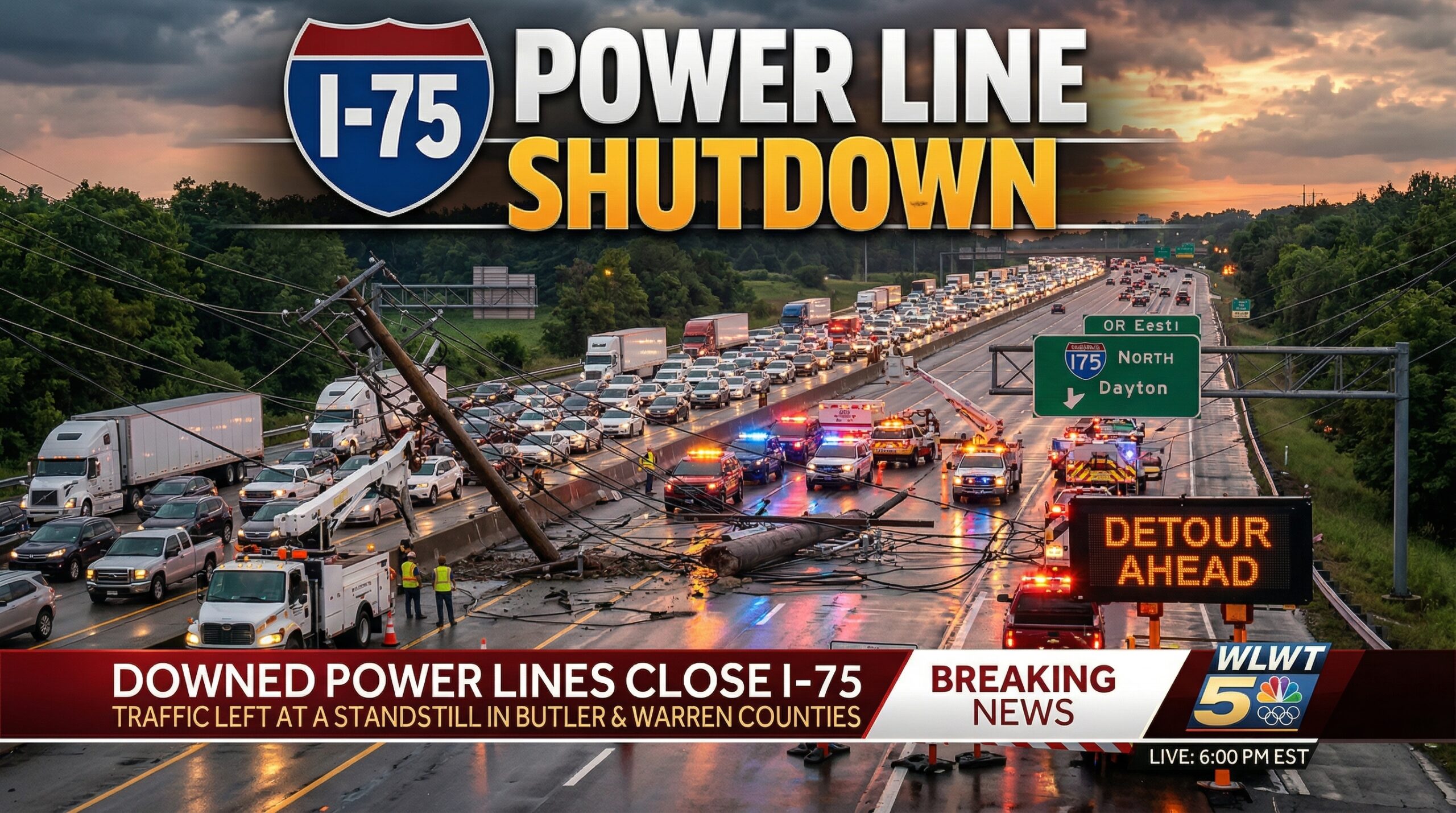
A major incident on Interstate 75 has brought traffic to a complete standstill, stranding thousands of drivers and disrupting regional transit. A sudden power line shutdown caused live electrical wires to drape across multiple lanes of the highway. Emergency responders and utility crews rushed to the scene to secure the area and begin the complex process of safely removing the hazard.
For daily commuters and long-haul transport vehicles, I-75 serves as a vital artery connecting major economic hubs. The sudden closure of such a critical roadway has far-reaching consequences. Local authorities quickly implemented emergency detours, but the sheer volume of displaced traffic quickly overwhelmed surrounding secondary roads.
This disruption highlights the vulnerability of our critical infrastructure. Travelers are currently facing hours of delays, and state police are urging anyone planning to travel through the corridor to seek alternative routes. Here is a comprehensive look at the unfolding situation, the emergency response, and what drivers can expect in the coming hours.
What Happened on I-75?
The crisis began during peak travel hours when a massive section of high-voltage transmission lines detached from their support structures and fell directly onto the highway. The incident affected both northbound and southbound lanes, creating an immediate physical barrier and an extreme safety hazard.
Highway patrol units received hundreds of calls within minutes as drivers slammed on their brakes to avoid the falling cables. Fortunately, the swift reactions of motorists prevented major multi-vehicle collisions directly beneath the falling lines. Police immediately set up a hard closure, effectively trapping the vehicles already in the immediate vicinity of the downed wires until the power could be completely cut.
Cause of the Power Line Shutdown
Utility companies and state engineers are actively investigating the root cause of the structural failure. Initial reports point toward a combination of severe weather conditions and potential material fatigue. High-speed wind gusts had been battering the region throughout the morning, placing immense strain on the aging utility poles that flank the interstate.
Engineers are also looking into whether recent ground saturation from heavy rains compromised the foundations of the transmission towers. A formal investigation will require inspecting the sheared hardware to determine if a structural defect contributed to the collapse. Until then, utility providers are conducting emergency inspections on adjacent towers to prevent any secondary failures.
Areas Affected
The most severe impact is concentrated on a five-mile stretch of I-75 where the lines physically cross the roadway. However, the ripple effects are being felt across a much wider geographic area. Law enforcement has closed all on-ramps within a ten-mile radius of the incident zone to prevent further congestion from building behind the blockage.
Nearby commercial districts and residential neighborhoods are also experiencing the fallout. The downed transmission lines have severed power to tens of thousands of local utility customers. Traffic lights at key intersections on alternative routes are dark, further compounding the localized gridlock.
Traffic Disruptions and Delays
The I-75 power line shutdown has created a logistical nightmare for regional transit. Within the first hour of the incident, traffic backed up for nearly a dozen miles in both directions. Commercial truck drivers, who rely heavily on this corridor for just-in-time freight delivery, are parked on the shoulders waiting for updates.
Secondary roads and state highways meant to serve as detours are experiencing unprecedented volume. Local law enforcement is manually directing traffic at major intersections where traffic signals are without power. Officials are strongly advising commercial carriers to reroute entirely, even if it adds significant mileage to their journey, as the localized detours cannot support heavy freight traffic.
Emergency Response and Repairs
The immediate priority for emergency crews was securing the scene to prevent electrocution. Utility companies initiated a remote shutdown of the transmission grid feeding those specific lines, but physical grounding and testing had to be completed before any debris could be moved.
State troopers, local police, and fire rescue teams established a wide perimeter. Once utility workers confirmed the lines were completely de-energized, heavy machinery was brought in to begin clearing the cables and the damaged support structures. The repair operation involves not only removing the debris from the highway but also erecting temporary utility poles to restore power to the surrounding communities.
Safety Advice for Travelers
Authorities have issued strict safety guidelines for anyone caught in the vicinity of the I-75 closure.
Remain in Your Vehicle
If you are stopped near the incident zone, do not exit your vehicle to inspect the damage. The ground around downed power lines can become energized, posing a lethal risk. Your vehicle’s rubber tires provide a layer of insulation.
Follow Official Detours
Do not attempt to navigate through residential side streets using standard GPS applications. Many of these apps do not account for the dark traffic signals and localized gridlock. Follow the physical signs and instructions from law enforcement officers directing traffic along approved detour routes.
Conserve Fuel and Battery
If you are stuck in the stationary traffic backup, turn off your engine to conserve fuel. Use your vehicle’s accessories sparingly to preserve battery life, but keep your radio tuned to local news stations for emergency broadcast updates.
Expected Restoration Timeline
Clearing a major interstate of high-voltage infrastructure is a slow, methodical process. Utility officials estimate that the physical removal of the cables from the road surface will take several hours. Following the removal, Department of Transportation engineers must inspect the asphalt for any heat damage or gouging caused by the falling structures.
Authorities hope to reopen at least one lane in each direction by late evening to relieve the trapped vehicles. However, a full restoration of normal traffic patterns is not expected until the following morning. Drivers should anticipate residual delays and plan their commutes accordingly for the next 24 to 48 hours.
Navigating the Aftermath of the Highway Closure
The I-75 power line shutdown serves as a stark reminder of how quickly infrastructure failures can halt daily life. While the immediate focus remains on safely clearing the highway and restoring power to local residents, the coming weeks will likely prompt a thorough review of utility inspections and highway safety protocols.
For now, travelers must practice patience and prioritize safety. Stay informed through official state transportation channels, adhere to designated detour routes, and allow extra time for any travel through the affected region.
