



Have you ever unrolled a yoga mat, listened to the instructor speak in complex terms, and wondered if there was a simpler way to get the benefits of the practice? You are not alone. A growing number of wellness enthusiasts are turning to a streamlined, highly effective approach known as Joga Directa.
This practice strips away the intimidation factor often associated with traditional yoga classes. Instead, it offers a straightforward, accessible path to physical strength, mental clarity, and deep relaxation. People love it because it focuses on functional movement and clear, direct instruction. You do not need to be deeply spiritual or incredibly flexible to start seeing results.
In this comprehensive guide, we will explore exactly what Joga Directa is and why it is capturing the attention of the fitness world. You will learn the core philosophy behind the practice, discover its wide-ranging physical and mental benefits, and get step-by-step instructions for basic exercises. By the end of this article, you will have all the tools you need to roll out your mat and start your own safe, effective practice.
What is Joga Directa?
At its core, Joga Directa translates to a “direct” or “straightforward” approach to yoga. It removes the complex terminology and intricate choreography found in some modern studios. Instead, it emphasizes practical alignment, functional flexibility, and mindfulness that you can apply directly to your daily life.
The Philosophy and Origin
While traditional yoga has roots stretching back thousands of years, Joga Directa evolved as a modern response to the overly complicated fitness industry. The philosophy is simple: movement should make your life better, easier, and pain-free. It borrows the most effective postures from Hatha and Vinyasa yoga but delivers them with clear, biomechanical cues. The goal is not to perform a perfect handstand. The goal is to move your body safely and efficiently.
Key Focus Areas: Flexibility, Mindfulness, and Strength
Joga Directa is built on a foundation of three pillars:
- Flexibility: Rather than forcing your body into painful contortions, the practice focuses on active mobility. You stretch the muscles you actually use, helping to undo the stiffness caused by sitting at a desk or driving.
- Mindfulness: The “direct” aspect applies to your attention as well. You learn to focus directly on the present moment, anchoring your busy mind to the sensation of your breath.
- Strength: Holding foundational poses builds serious muscular endurance. Joga Directa places a heavy emphasis on core stability and joint strength, making you more resilient in your everyday activities.
The Life-Changing Benefits of Joga Directa
Committing to a regular practice yields incredible dividends for your body and your brain.
Physical Health Benefits
The most immediate changes you will notice are physical. Because Joga Directa focuses on proper alignment, it naturally corrects poor posture. As you strengthen your back and core muscles, you will find yourself standing taller and experiencing less lower back pain. Furthermore, the targeted stretching routines significantly improve your flexibility, making everyday movements like bending down to tie your shoes or reaching for a high shelf feel effortless.
Mental Benefits
The mental rewards are equally powerful. Joga Directa acts as a reset button for a stressed nervous system. By requiring you to focus entirely on your breathing and your body’s position in space, it leaves no room for anxious thoughts about work or personal life. Regular practitioners report lower baseline stress levels, improved concentration during the workday, and a greater sense of overall calm.
Lifestyle Improvements
When you feel better physically and mentally, your entire lifestyle improves. Better stress management leads to higher quality sleep. Less physical pain means you have more energy to play with your kids, take up new hobbies, or simply enjoy a weekend hike. Joga Directa teaches you how to listen to your body, a skill that translates into better choices regarding nutrition and rest.
Basic Joga Directa Exercises to Try Today
Ready to get started? You can practice these foundational movements right in your living room. Focus on the quality of your movement rather than how deep you can go.
1. The Direct Stand (Mountain Alignment)
This is the blueprint for all other postures in Joga Directa.
- Step 1: Stand with your feet hip-width apart. Press the four corners of your feet firmly into the floor.
- Step 2: Engage your thigh muscles slightly to lift your kneecaps.
- Step 3: Pull your belly button gently toward your spine to engage your core.
- Step 4: Roll your shoulders up, back, and down. Let your arms hang naturally by your sides with your palms facing forward.
- Step 5: Take five deep, slow breaths, focusing on standing as tall as possible.
2. The Straight Forward Fold
A highly effective release for the hamstrings and lower back.
- Step 1: From the Direct Stand, take a deep breath in and reach your arms overhead.
- Step 2: As you exhale, hinge at your hips (not your lower back) and fold your torso over your legs.
- Step 3: Bend your knees as much as you need to let your hands rest on your shins, your ankles, or the floor. Let your head hang heavy.
- Step 4: Hold for five to eight breaths. With every inhale, find a tiny bit of length in your spine. With every exhale, sink a little deeper.
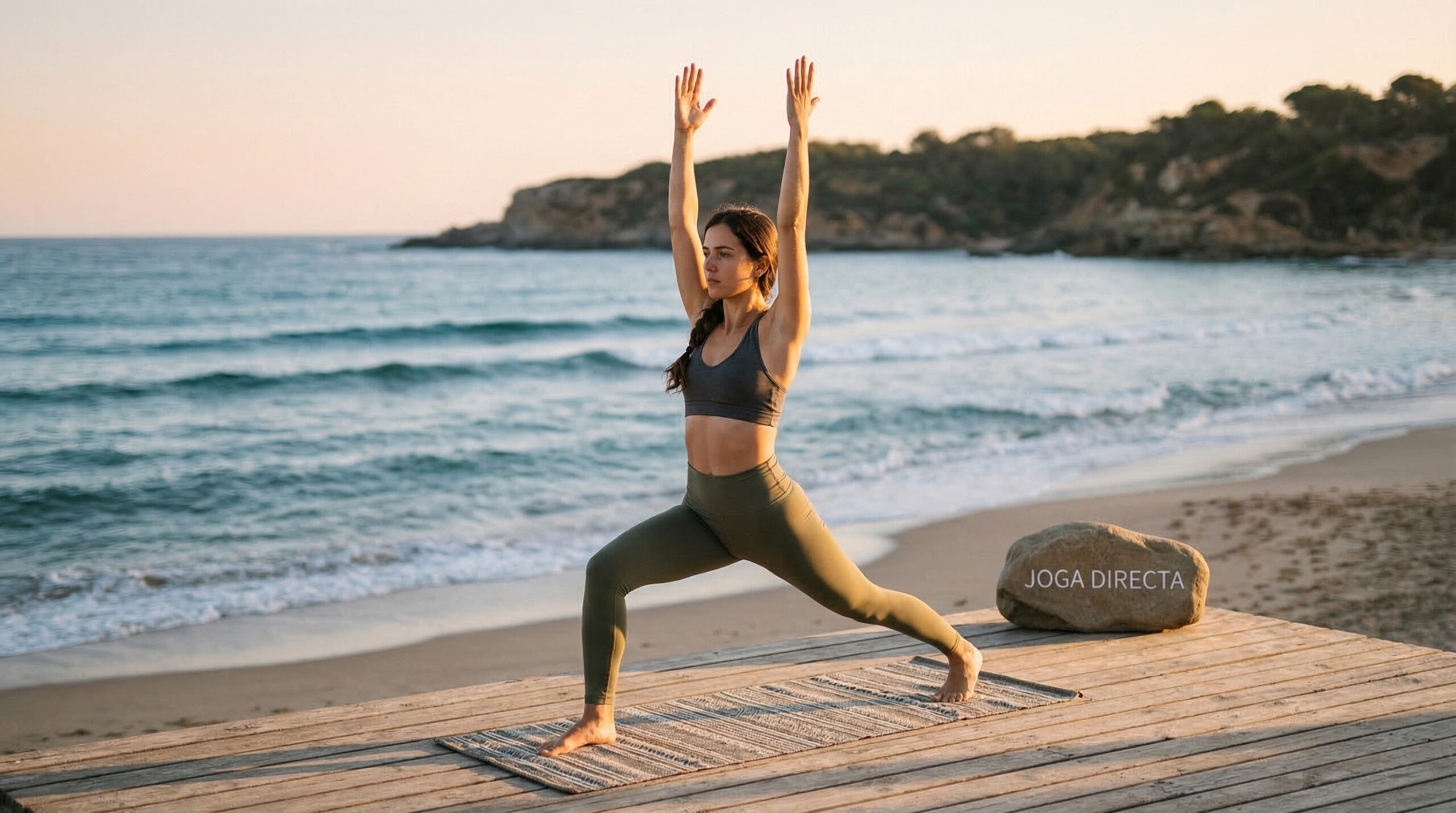
3. The Grounded Warrior
Builds lower body strength and opens the hips.
- Step 1: Step your right foot forward and your left foot back about three to four feet.
- Step 2: Turn your left foot out at a 45-degree angle, keeping your right foot pointing straight ahead.
- Step 3: Bend your right knee so it tracks directly over your right ankle. Keep your back leg perfectly straight and strong.
- Step 4: Lift your torso and raise your arms straight up toward the ceiling. Keep your shoulders relaxed.
- Step 5: Hold for five breaths, feeling the strength in your legs. Switch sides.
Tip for duration: Beginners should aim to run through these basic exercises three to four times a week, spending about 15 to 20 minutes per session.
Common Mistakes to Avoid
Even with a straightforward practice, it is easy to fall into bad habits. Watch out for these common pitfalls.
Incorrect Alignment
Because Joga Directa removes the fluff, alignment is everything. Letting your knee collapse inward during a lunge or rounding your lower back during a fold can lead to joint strain. Always prioritize a straight spine over reaching the floor. Use a mirror or record yourself on your phone to check your form.
Overstretching
More pain does not equal more gain. Pushing your muscles past their comfortable limit triggers a reflex that actually makes them tighter, increasing the risk of muscle tears. You should feel a mild, challenging tension when you stretch, never sharp or burning pain.
Ignoring Breathing Techniques
Breath is the fuel for your practice. Many beginners hold their breath when a pose gets difficult. This deprives your muscles of oxygen and spikes your blood pressure. If you realize you are holding your breath, back out of the pose slightly until you can breathe smoothly again.
Essential Tips for Beginners
Setting yourself up for success makes it much easier to turn Joga Directa into a lifelong habit.
Find Your Best Time to Practice
Consistency beats intensity. Choose a time of day that realistically fits your schedule. Some people love a 15-minute morning routine to wake up their joints. Others prefer an evening session to wash away the stress of the workday. Pick a time and stick to it.
Keep Equipment Simple
You do not need an expensive wardrobe to practice. A standard, non-slip yoga mat is the only true essential. However, having a couple of yoga blocks (or thick books) can help bring the floor closer to you during forward folds, making the practice much more accessible for stiff bodies.
Combine with Other Modalities
Joga Directa pairs beautifully with other forms of fitness. If you are a runner or a weightlifter, use this practice on your active recovery days to maintain mobility. You can also conclude your Joga Directa session with five minutes of silent meditation to double down on the mental benefits.
Frequently Asked Questions (FAQs)
Can beginners do Joga Directa?
Absolutely. The entire philosophy of this style is built around accessibility. The cues are easy to understand, and the poses can be modified to accommodate any fitness level, age, or body type.
How long before I see results?
Most practitioners feel a difference in their mental clarity and stress levels after a single session. Physical changes take a bit more time. If you practice consistently three times a week, you will likely notice improvements in your flexibility and posture within three to four weeks.
Do I need a trainer?
You do not strictly need a trainer to start, especially if you follow reliable online guides and pay close attention to your body. However, taking a few in-person classes or booking a session with a certified instructor can be incredibly helpful for learning proper alignment and avoiding bad habits early on.
Take the Next Step on Your Wellness Journey
Joga Directa is a powerful tool for reclaiming your health. By cutting through the noise and focusing on direct, functional movements, it delivers physical strength, improved flexibility, and profound mental clarity. The practice is completely adaptable to your lifestyle, requiring minimal equipment and just a few minutes of your day.
The best way to understand the benefits is to experience them yourself. Commit to trying a short session this week. Roll out a mat, take a deep breath, and discover how simple feeling good can truly be.
