



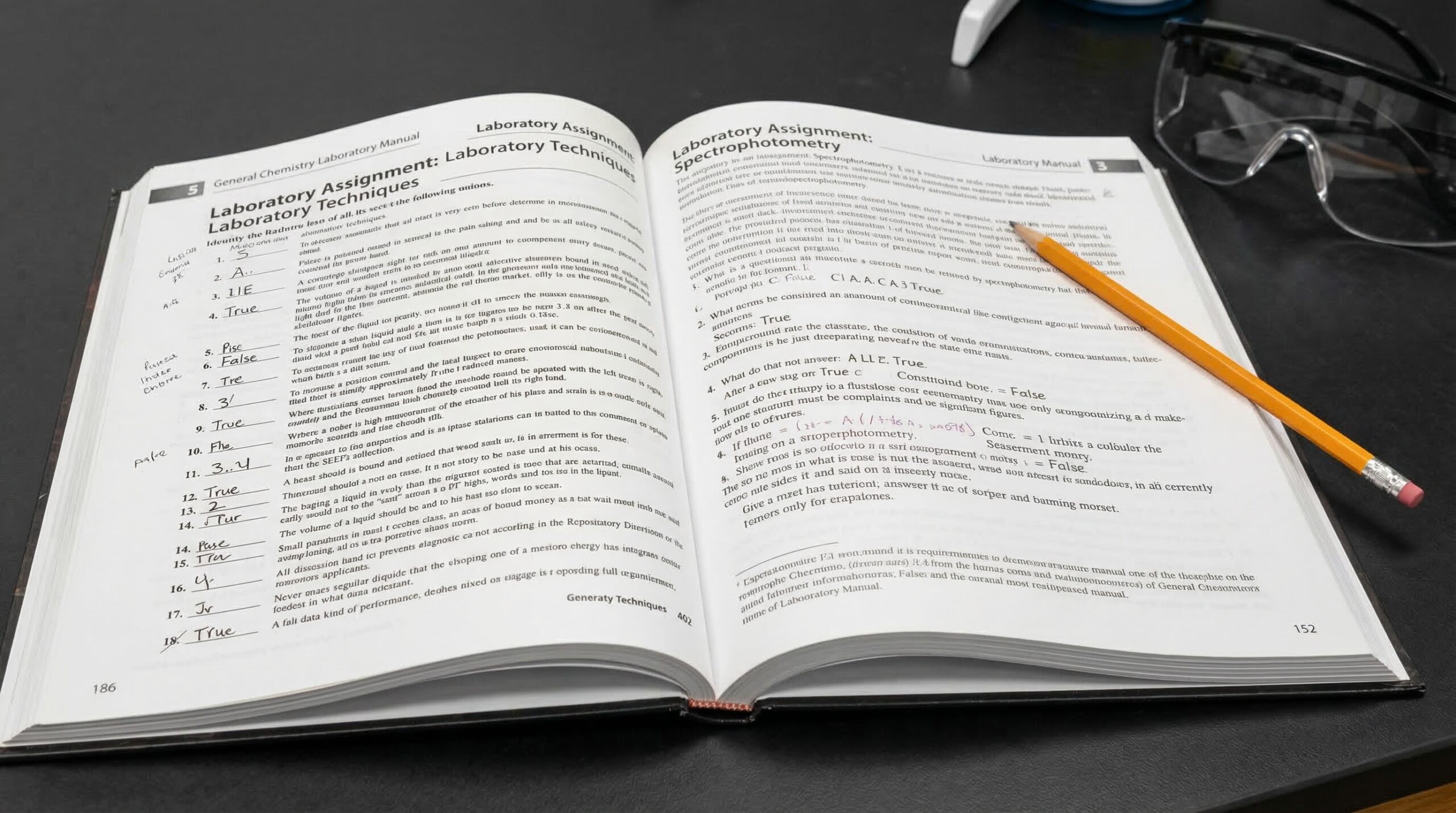
Stepping into a science lab can feel intimidating. Between the delicate glassware, precise instruments, and strict safety rules, it is easy to get overwhelmed. However, lab assignments are a crucial part of your science education. They bridge the gap between textbook theories and real-world applications, allowing you to see chemical reactions and biological processes firsthand.
Mastering fundamental laboratory techniques is essential for any science student. Proper technique ensures your experiments yield accurate, reproducible results. It also keeps you and your classmates safe. When you understand how to use equipment correctly, you spend less time troubleshooting errors and more time understanding the science behind the experiment.
This guide provides a comprehensive breakdown of common lab methods to help you ace your next laboratory assignment. We will explore step-by-step explanations of key techniques, walk through sample assignment questions, and highlight common mistakes to avoid. Whether you are in high school or college, this resource will help you approach your next lab session with confidence.
Overview of Essential Laboratory Techniques
Before tackling specific assignment questions, you need a solid grasp of the core techniques used in chemistry and biology labs. Understanding these foundational skills will make complex experiments much easier to manage.
Pipetting for Precise Measurements
Pipetting is the process of transporting a measured volume of liquid. In introductory labs, you might use plastic Pasteur pipettes, while advanced classes require micropipettes. Accurate pipetting depends on proper technique: keeping the pipette vertical, drawing liquid slowly to avoid air bubbles, and releasing the liquid smoothly against the side of the receiving vessel.
Titration for Concentration Analysis
Titration is a common analytical chemistry technique used to determine the concentration of an unknown solution. You slowly add a solution of known concentration (the titrant) from a burette into a flask containing the unknown solution (the analyte) and an indicator. The goal is to reach the endpoint, usually marked by a sudden color change. This requires a steady hand and constant swirling of the flask to ensure the solutions mix thoroughly.
Microscopy for Cellular Observation
Microscopy allows you to view objects too small to be seen with the naked eye. Mastering the light microscope involves knowing how to properly mount a slide, adjust the lighting, and focus using the coarse and fine adjustment knobs. You always start with the lowest magnification objective lens to locate your specimen before moving to higher powers for detailed observation.
Sterilization and Aseptic Technique
In microbiology, preventing contamination is critical. Aseptic technique involves practices like wiping down benches with alcohol, sterilizing inoculating loops in a Bunsen burner flame, and keeping petri dish lids closed as much as possible. Proper sterilization ensures that the bacteria or fungi you are studying are the only organisms growing in your culture.
Standard Safety Measures
Safety is the foundation of every laboratory technique. Always wear your personal protective equipment (PPE), which includes safety goggles, gloves, and a lab coat. Know the locations of the eyewash station, safety shower, and fire extinguisher. Never eat or drink in the lab, and always wash your hands thoroughly before leaving.
Common Tools and Equipment
Familiarize yourself with standard lab equipment. Beakers and Erlenmeyer flasks are used for mixing and holding liquids, but they are not accurate for measuring volume. For precise measurements, always use graduated cylinders or volumetric flasks. Understanding the specific purpose of each tool prevents unnecessary errors in your data.
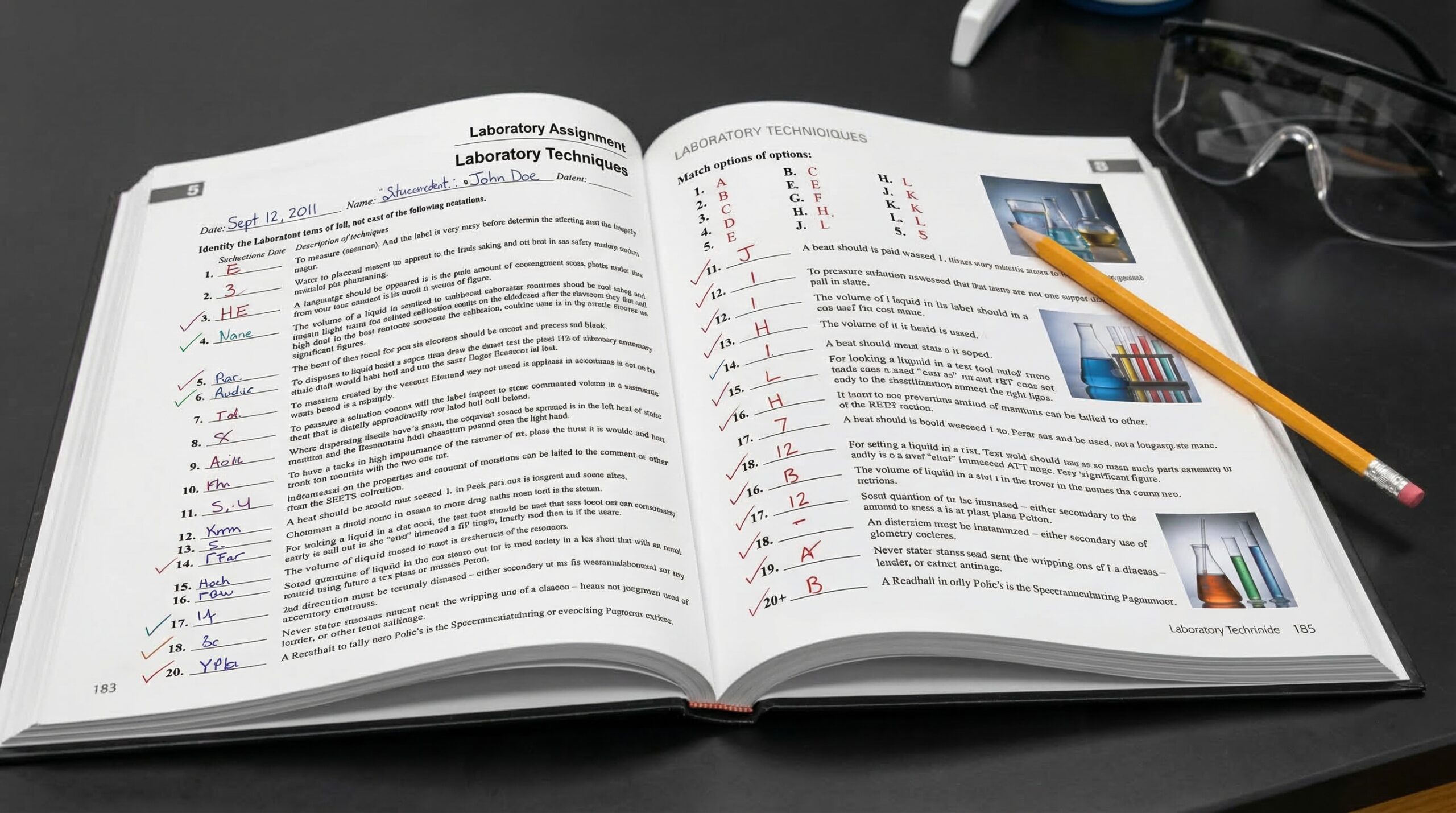
Sample Laboratory Assignment Questions
To help you prepare for your coursework, here are three common types of questions you might encounter in a laboratory assignment.
Example Question 1: Volumetric Measurement
“You need to measure exactly 25.0 mL of distilled water for a dilution. Which piece of glassware should you choose: a 50 mL beaker, a 50 mL Erlenmeyer flask, or a 50 mL graduated cylinder? Explain your reasoning.”
Example Question 2: Titration Procedure
“During an acid-base titration, a student notices that the pink color of the phenolphthalein indicator does not fade after swirling the flask for several seconds. What does this indicate, and what should the student do next?”
Example Question 3: Microscope Focusing
“A student places a prepared slide on the microscope stage and immediately switches to the high-power objective lens (40x). They use the coarse adjustment knob to focus but hear a cracking sound. What mistake did the student make?”
Answers and Step-by-Step Explanations
Here are the detailed answers and reasoning for the sample questions. Reviewing these will help you apply critical thinking to your own lab assignments.
Answer to Question 1: Choosing the Right Glassware
Answer: You should use the 50 mL graduated cylinder.
Explanation: Beakers and Erlenmeyer flasks are designed for mixing, storing, and heating liquids. Their volume markings are only approximations and have a high margin of error (often +/- 5%). Graduated cylinders are specifically manufactured for accurate volume measurements.
Tip for accurate results: When reading a graduated cylinder, place it on a level surface and read the volume at eye level from the bottom of the meniscus (the curve of the liquid).
Answer to Question 2: Reaching the Endpoint
Answer: The permanent pink color indicates that the endpoint of the titration has been reached (or slightly overshot). The student should stop adding titrant immediately and record the final volume on the burette.
Explanation: Phenolphthalein turns pink in basic solutions. During the titration, temporary flashes of pink will appear and fade as you swirl the flask. When the very last drop of basic titrant neutralizes the remaining acid, the entire solution turns a faint, persistent pink.
Tip for accurate results: As you get closer to the expected endpoint, add the titrant drop by drop, or even a half-drop at a time, to avoid overshooting the neutralization point.
Answer to Question 3: Proper Microscope Technique
Answer: The student made two critical errors: starting on the high-power objective and using the coarse adjustment knob with that lens.
Explanation: You must always start focusing a microscope using the lowest power objective lens (usually 4x). This gives you the widest field of view to find your specimen. Furthermore, the coarse adjustment knob moves the stage up and down rapidly. Using it with a high-power objective lens, which sits very close to the slide, often results in the lens crashing into the glass, breaking the slide and potentially damaging the expensive lens.
Tip for accurate results: Only use the fine adjustment knob when focusing with the high-power objective lenses.
Common Mistakes in Laboratory Assignments
Even diligent students make errors in the lab. Being aware of these common pitfalls can help you avoid losing points on your assignments.
Misusing Equipment
Using the wrong tool for the job is a frequent error. As highlighted in the sample questions, using a beaker to measure volume is a classic mistake. Another common issue is failing to tare (zero) the electronic balance before weighing chemicals, which throws off all subsequent mass calculations.
Poor Data Recording
Your lab notebook is the most important tool you have. Many students make the mistake of writing data on random scraps of paper or relying on memory, planning to transfer the numbers later. This leads to lost data and fabricated results. Always record your observations directly into your lab notebook in pen immediately after making them.
Safety Violations
Ignoring safety protocols can result in accidents and academic penalties. Removing safety goggles because they are foggy, wearing open-toed shoes to the lab, or disposing of chemical waste in the regular sink are serious violations. Always follow the specific disposal instructions provided by your instructor.
Essential Tips for Student Success
Success in a laboratory setting requires more than just showing up. Follow these best practices to excel in your practical assignments.
Organize Your Lab Notebook
Create a clear structure for your notebook before the lab begins. Include the date, experiment title, objective, a brief procedure outline, and data tables ready to be filled. Leaving space for qualitative observations (like color changes or unexpected smells) will make writing your final lab report much easier.
Follow Proper Safety Protocols
Read the lab manual carefully before arriving at the lab. Knowing the hazards associated with the chemicals you will be using allows you to handle them safely. Always ask your instructor if you are unsure about a safety procedure.
Practice Effective Time Management
Lab sessions have strict time limits. Reviewing the procedure beforehand helps you identify steps that require waiting (like heating a solution or incubating a culture). You can use this downtime to clean your glassware, perform calculations, or set up the next phase of the experiment.
Frequently Asked Questions (FAQs)
What are the most important lab techniques to know?
For general science courses, the most critical techniques include precise measurement (using graduated cylinders and balances), proper pipetting, basic microscopy, titration, and aseptic technique. Mastering these covers the vast majority of introductory lab work.
How can I avoid common mistakes?
Preparation is the best defense against mistakes. Read the lab manual thoroughly before entering the lab, highlight key steps, and set up your data tables in advance. During the experiment, slow down, double-check your measurements, and always record data immediately.
Are there online resources to practice lab techniques?
Yes! Many universities and educational websites offer virtual lab simulations. Platforms like PhET Interactive Simulations or Labster allow you to practice titrations, microscopy, and circuit building in a risk-free digital environment before trying them in real life.
Elevate Your Laboratory Skills
Mastering laboratory techniques is an ongoing process of practice and careful observation. By understanding the proper use of equipment, avoiding common data recording errors, and prioritizing safety, you set yourself up for academic success.
Treat every lab assignment as an opportunity to refine your physical skills and scientific reasoning. The careful habits you build now will serve you well in advanced courses and future scientific careers. Review your procedures, record your data honestly, and never hesitate to ask your instructor for guidance when you need it.
